
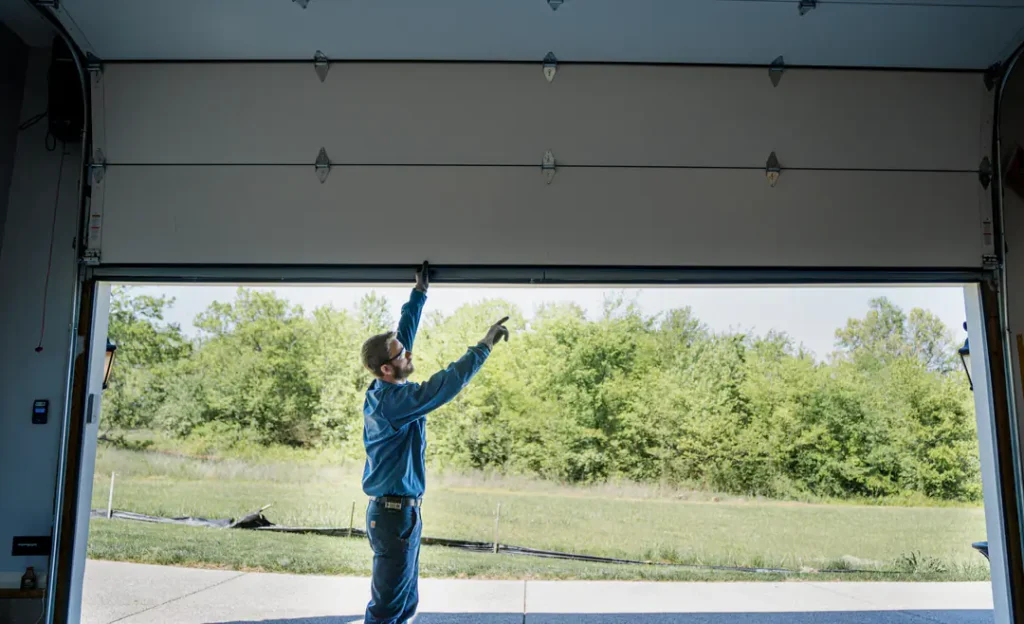
Sticking Keys, Jammed Locks
Garage Door Lock Repair in Washington, DC
Call for garage door lock repair in Washington, DC when your key sticks, the latch jams, or the door will not secure. We inspect the lock and its connection to the door to find what is stopping it from working.
- Open 24/7
- 5-year warranty on repairs
- English and Spanish
Get a fast quote
Garage Door Lock Trouble: Sticking Keys and Latches That Will Not Catch
Your key is difficult to insert or turn
A key that stops partway in and a key that enters but will not turn give us different starting points. Tell us which happens, and avoid forcing the key while we check the cylinder and lock operation.
The key turns, but the latch stays put
Turning the key does not tell you whether the latch has moved. We check the connection between the cylinder, handle, and locking hardware to locate where movement stops.
The door closes but will not lock
The latch needs to meet its receiving point for the lock to secure the door. We inspect that contact and check whether the problem lies in the lock hardware or the door’s closing position.
The handle or lock feels loose
Movement in the handle or lock mounting deserves attention even when the key still works. We inspect the attachment points and surrounding area before deciding what needs repair.
A jammed lock blocks access
Tell us whether you are inside or outside and whether another entrance is accessible. For an urgent access problem, request emergency garage door repair and describe the lock’s position without forcing the door.
Garage Door Lock Checks From the Key Cylinder to the Latch
- Identify the lock and the exact symptom — We inspect the locking hardware fitted to your door and establish whether the trouble occurs during key insertion, turning, latch movement, or final engagement.
- Check key and cylinder operation — We examine how the key enters and turns in the cylinder. Mention a bent key, a recent change in resistance, or a key that has broken in the lock.
- Inspect the handle and connecting hardware — We trace movement from the handle or cylinder to the latch. This separates a lock that does not turn from a mechanism that turns without moving its locking parts.
- Check latch engagement — We inspect where the latch meets the receiving hardware with the door closed. Alignment matters because moving the latch and securing the door are separate checks.
- Inspect lock mounting and nearby damage — We check the hardware that holds the lock in place and look at the surrounding door area. Tell us about an impact or attempted forced entry so we inspect that location.
- Test the repair through a complete cycle — After the repair, we test locking and release with the door in its closed position. We also check that the lock releases fully before checking normal door movement.
Need help now? (771) 240-1725
From Your First Call to a Garage Door Lock That Secures and Releases
- Describe what the key and door actually do — When you call, tell us whether the door is open or closed, whether the key turns, and whether you have another way inside. Have the key available for the visit, along with a spare if you already have one.
- We inspect the lock at your property — We come to your location in Washington, DC or the nearby towns we serve. The inspection follows the mechanism from key movement to latch engagement, including how the lock sits on the closed door.
- We identify the repair and give you the estimate — The technician identifies the affected hardware and the work required before repair begins. We distinguish a lock problem from a door-position problem so the estimate addresses the cause of the trouble.
- We repair and check both locked and released positions — We complete the agreed work, then test whether the latch engages and withdraws. Before operating a powered door, the manual lock must be fully released; testing only the key turn would leave that essential check unfinished.
Garage Door Lock Repair in Washington: What Affects the Price?
The price depends on the lock fitted to your door, the affected parts, access to the mechanism, and any damage around its mounting points. A sticking cylinder and a latch that misses its receiving point require different work. A general garage door repair starting price does not establish the price of your lock repair.
We provide a free on-site estimate, including the technician visit, so you can review the actual scope before approving the work. Show the technician any related handle, panel, or closing problem during that inspection. There is no extra charge for nights or weekends.
Need help now? (771) 240-1725
Garage Door Lock Repair With Attention to the Whole Door
DC Garage Door Repairs is licensed and insured, and owner Russell Donovan has 19 years of experience in garage door repair and installation. We check how the lock works with the door because repairing the cylinder alone does not address a latch that fails to engage. When the inspection identifies a wider door problem, our residential garage door repair service covers the related work. All repairs and installations carry a 5-year warranty.
Related services
Frequently asked questions
Should I force a garage door key that will not turn?
Do not force a key that stops turning or begins to bend. Leave the lock as it is and tell us whether the key enters fully, turns partway, or will not enter at all. Those details help us distinguish key-entry trouble from resistance elsewhere in the mechanism.
Why does my garage door key turn without releasing the door?
The cylinder turning and the latch releasing are separate actions. We inspect the connection between them and check whether the latch remains engaged against the receiving hardware. Tell us whether the handle also moves, since that gives us another point to check during the inspection.
Can a garage door lock problem actually be an alignment problem?
Yes. A latch that moves freely still needs to line up with its receiving point when the door closes. We check the lock against the closed door before deciding whether the repair belongs at the lock, its mounting, or the door’s closing position.
Can I use my garage door opener while the manual lock is engaged?
Release the manual lock fully before operating the opener. If the lock will not release, stop using the opener and request a lock inspection. Tell the technician if the opener has already been operated against the locked door so we can check the surrounding hardware as well.
What should I do if a broken garage door key is stuck in the lock?
Leave the broken piece in place instead of pushing another object into the cylinder. Keep the remaining part of the key for the technician to inspect. We check the obstruction and cylinder condition before determining the repair required to restore lock operation.
Does a garage door lock need replacement if it feels loose?
A loose lock does not establish that the entire mechanism needs replacement. We inspect its mounting, handle, connections, and surrounding door material to identify what is moving. The estimate reflects the affected components and any related damage, rather than treating every loose handle as the same repair.
Get Your Garage Door Lock Checked
Call DC Garage Door Repairs and tell us whether the key sticks, the latch jams, or the closed door will not lock.