
Can a Broken Garage Door Spring Be Repaired?
Yes—a broken garage door spring is repaired by replacing the damaged spring, not by patching it. Call DC Garage Door Repairs at (771) 240-1725; we come to your home to inspect the door and estimate the repair.
Need help now? (771) 240-1725
Can a Broken Garage Door Spring Be Repaired by Replacing It?
A broken spring cannot be restored by welding, bending, or tightening it. The repair is to replace the damaged spring with one suited to the door’s weight and spring system. A technician should also check the related parts and balance before returning the door to use.
A spring under tension stores enough force to lift a heavy door. Do not touch it, loosen its hardware, or try to wind or remove it. Keep people and pets away from the door, and leave it closed if it is already down.
Our garage door spring repair service includes an on-site check to identify whether the spring is broken or another part is causing the problem. A repair estimate for spring work starts at $55, plus labor from $25.
What Signs Point to a Broken Garage Door Spring?
These signs can point to a broken spring, but they do not confirm the cause on their own. Observe the door from a safe distance; do not touch the spring, cables, or brackets to check.
- The door will not lift — The opener may run while the door stays on the floor, or the door may start to move and stop. Stop using the opener rather than making repeated attempts.
- The door feels unusually heavy — A door that has lost spring support can be difficult or unsafe to lift. Do not try to raise it by hand to test its weight.
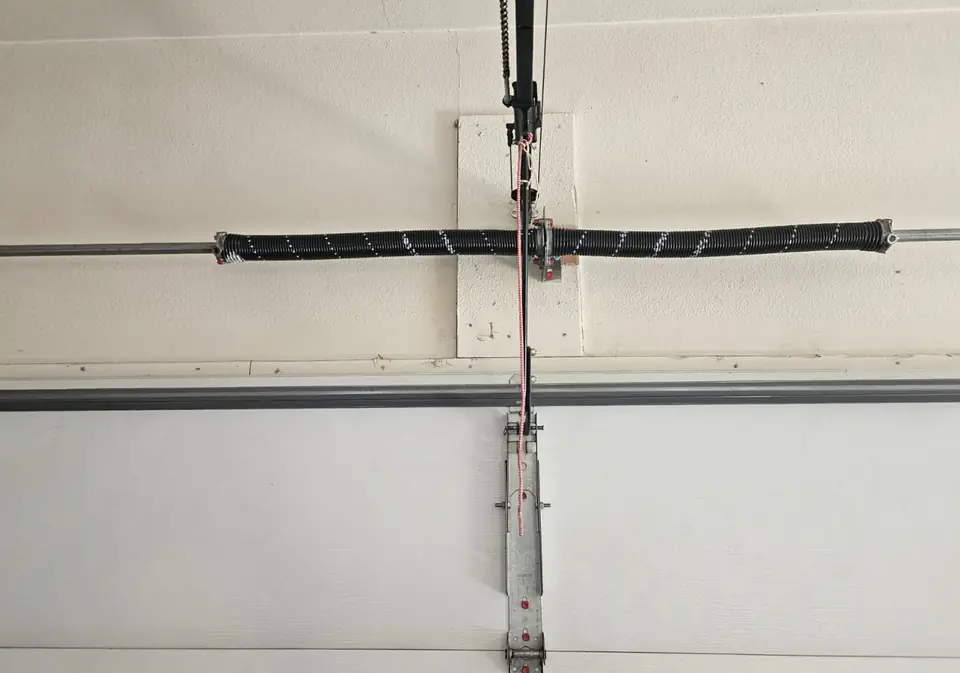
- A visible gap in a spring — On a torsion spring mounted above the door, a clear gap in the coil can indicate a break. Look from a distance and do not reach toward the spring.
- The door hangs unevenly — One side may rise higher than the other, or the door may appear crooked in its tracks. Stop the opener because continued movement can strain other parts.
- A sudden loud bang — A sharp bang from the garage can happen when a spring breaks, even if you did not see the event. Check for other visible signs from outside the door’s path.
How Does a Broken Spring Differ From an Opener or Track Problem?
A door that will not move does not always have a broken spring. These clues can help you describe the problem, but a technician needs to inspect the door before diagnosing the fault.
Broken or damaged spring
A visible gap, a heavy door, or a door that will not lift can point to spring failure. Do not try to confirm it by lifting the door or handling spring hardware.
Opener or control problem
If the door is fully closed and the opener does not respond, the fault may involve the remote, wall control, power, or opener. A spring problem is more likely when the door itself is too heavy or will not rise.
Track, roller, or cable problem
A door that sits crooked, binds, or has a cable hanging loose may have a track or related hardware issue. Keep clear and do not move the door; cables can be under tension.
More than one fault
A broken spring can put extra strain on the opener and other door parts. A technician should check the full lifting system rather than replacing a spring and assuming the rest is sound.
Need help now? (771) 240-1725
What Can You Safely Do Before Spring Repair?
Use these steps to keep the area safe and give the technician useful information. They do not involve adjusting, removing, or testing a spring.
- Stop the opener — Do not press the wall button or remote again if the door strains, stops, or moves unevenly. Check that the opener has stopped moving the door.
- Keep clear of the door — Move people, pets, and vehicles out from under and beside the door. Check that no one is standing in its travel path.
- Leave the door in place — Do not lift, lower, or brace a door that may have a broken spring. Check that nobody is trying to move it by hand.
- Do not pull the emergency release — The release cord disconnects the opener, but it does not support the door. Leave it alone and check that it remains connected.
- Look from a safe distance — Use a flashlight only if needed to see a visible gap in the spring or a hanging cable; do not reach into the garage hardware. Check only what you can see without stepping beneath the door.
- Note what happened — Write down whether the door was opening or closing, whether the opener ran, and whether you heard a bang. Check that you can share those details without testing the door again.
- Call for an inspection — Tell the technician the door’s position and the signs you observed. Check that you have given the information without touching the spring, cables, or brackets.
What Does a Technician Check During Spring Repair?
The technician first identifies the spring system and checks the door’s condition before deciding what to replace. That includes looking at the spring, lift cables, drums or pulleys, rollers, tracks, hinges, and opener for visible damage or strain.
For a spring replacement, the technician matches the replacement to the door and its lifting system. Spring winding bars and other purpose-made tools are used by trained technicians; they are not tools for a homeowner to use on a loaded spring.
After the repair, the technician checks that the door travels evenly and that the opener operates without forcing the door. A maker’s safety guidance, such as the Clopay garage door safety checklist, also emphasizes keeping clear of moving doors and their hardware.
What Can Go Wrong If You Keep Using a Door With a Broken Spring?
An opener is designed to move a balanced door, not carry the door’s full weight without spring support. Repeatedly pressing the remote can strain the opener, while a door that shifts or drops can damage other hardware or cause an injury.
Do not stand beneath a door that is stuck partly open, and do not try to secure it with a board or another object. Keep the opening clear and contact a repair technician. If the door is blocking a vehicle or access, say so when you call rather than attempting to force it open.
The point at which broader damage makes repair unsuitable depends on the condition of the door and its parts. Our guide to when a garage door is damaged beyond repair covers signs that may affect that decision.
Need help now? (771) 240-1725
What Should You Do Next About a Broken Spring?
Leave the door alone and arrange an inspection if you see a gap in the spring, the door will not lift, or it moves unevenly. We provide a free on-site estimate, and spring repair starts at $55, plus labor from $25. The estimate lets you see what the technician found before work begins.
A technician may find that a cable, roller, opener, or track also needs attention, so the final work depends on the inspection. For the price details on a related question, see what affects the average price for garage door spring repair. You can also read about how often a garage door needs service to understand routine checks after the immediate fault is handled.
Frequently asked questions
Can I open my garage door if the spring is broken?
Do not try to open it by hand or with the opener. Without spring support, the door can be extremely heavy, move unevenly, or fall; keep clear and arrange an inspection.
Can a garage door work with only one spring intact?
It may move, but that does not mean it is safe to use or properly balanced. Stop operating the door and have a technician check the spring system and related hardware.
How can I tell whether the spring or the opener failed?
A visible gap in a spring, a heavy door, or a door that begins to lift and stops can point to spring trouble. An opener that does not respond while the door is fully closed may have a control or power issue, but do not test the door repeatedly to diagnose it.
Should I replace both garage door springs if one breaks?
That depends on the spring setup and the condition of the remaining spring, which a technician can assess during inspection. Ask the technician to check both springs and the door’s balance before approving the repair.
Keep the Door Still and Call for Spring Repair
Call DC Garage Door Repairs at (771) 240-1725 for an on-site spring inspection and estimate.